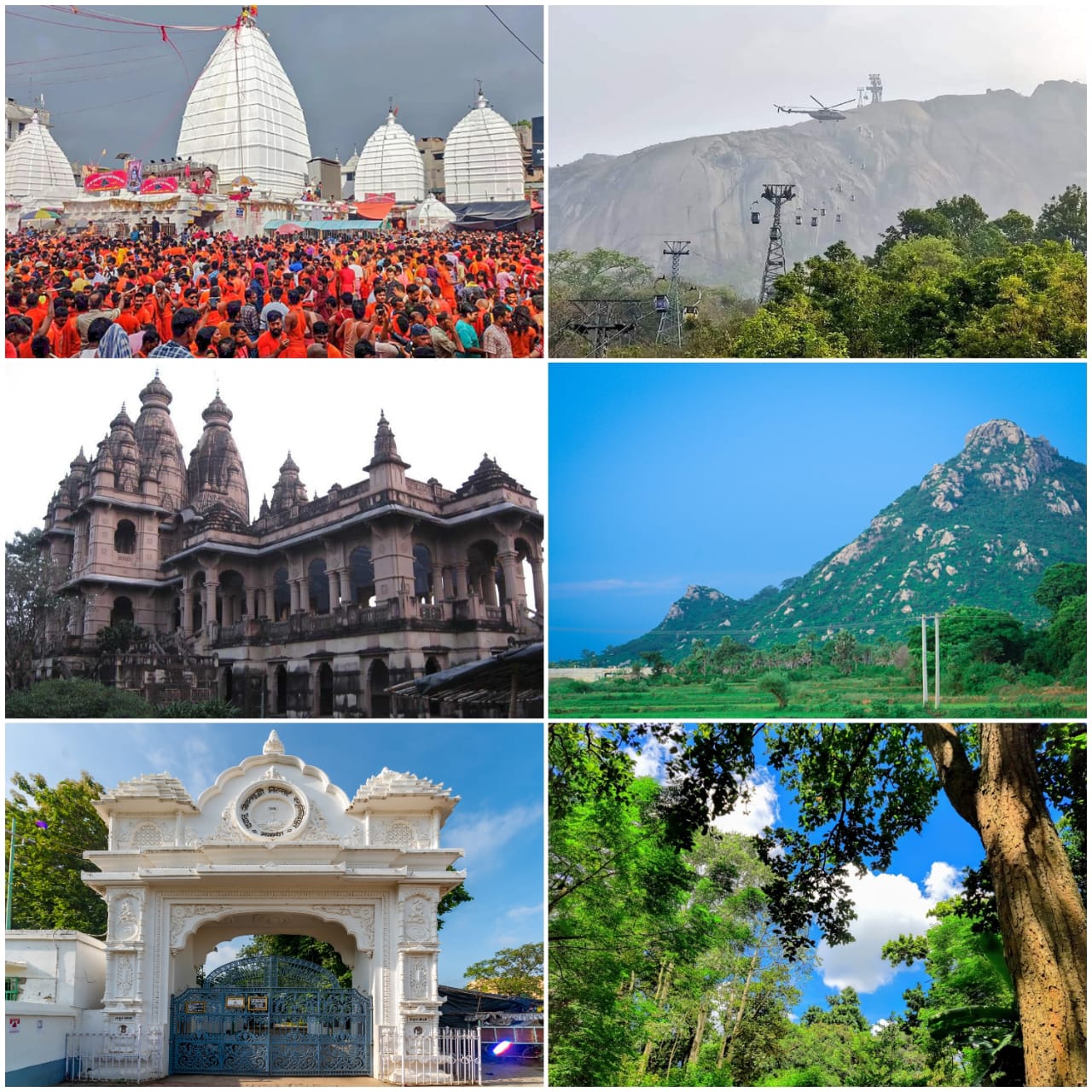


According to classification of forest types suggested by Champion and Seth, the forest crops of Deoghar Forest Division may primarily be classified into the following categories:
Dry Peninsular Sal Forest:
This type of forest mostly occurs on plains and lower reaches as well as in sheltered depressions in hilly areas. Sal forest can be seen on plain areas of Digharia Pahar in sheltered depression of the hill. During stock mapping it was found in lower hill areas of Trikut Pahar and Phuljori Pahar in Northern Aspect of Deoghar Range as well as in Eastern hill ridges in lower parts of Madhupur Range and adjacent Manigarhi Beat of Deoghar Range. At present, Sal forests in its pure form has been ousted due to continuous selective felling and grazing.
Northern Dry Mixed Deciduous Forest
This type of crop generally occurs on the upper reaches of the hills which consists of Anogeissus latifolia (Dhaw) and Boswellia serrata (Salai) with the usual associates like Terminalia tomentosa (Asan), Lagerstroemia parviflora (Sidha), Lannea cromandelica (Jial), Madhuca indica (Mahua)and Acacia catechu (Khair). In the upper reaches of hills, bamboo patches in some of the areas like Digharia Pahar, Babudih, Trikut Pahar, Phuljori Pahar, Malue Pahar, Dharam Pahar etc. are discernible.
The incidence of Boswellia serrata increases on the higher slopes. Aegle marmelos (Bel) is also noteworthy.
Dry Deciduous Scrub
This type of forest occurs on dry eroded areas which have suffered so much in the past that tree species have almost been obliterated and only the thorny species have been able to hold the ground. Gardenia spp., Randia spp., Acacia catechu, Zyzyphus, Carissa, Holorrhena are commonly found in these areas. Incidence of Khair is increasing in such areas.
Patches of bamboo (Dendrocalamus strictus) occur on the higher reaches of Trikut, Digharia and Phuljori hills. Ruthless hacking has reduced the crop alarmingly. Only the bamboo culms are visible in these areas.
Khair is present in some areas of Dumdumi, Mohandih, Dubrajpur, Devipur, and Bagha Pahar. Natural regeneration is not seen due to heavy biotic pressure. The condition of standing trees is not good.
Salai are very few, present mostly on upper reaches. Regeneration of Salai could not be found during stock mapping. Butea superba, Bauhinea vehlii, Acacia pinnata, Asparagus racemosus, Combratum decendrum are some of the climbers present all over the forests. Most of the plantation work that has been taken up is that of Acacia species. Natural regeneration of Acacia auriculiformis has been seen during regeneration survey in Pipra, Trikut Pahar, Devipur, Dubrajpur etc. At some places, plantation areas have been found to be unsatisfactory and these have greater likelihood of presenting a blank landscape in near future.